Pam's Place: Freebies

Showing posts with label Freebies. Show all posts

Why Teaching Inferencing in Math is Important

Have you ever had a student correctly solve a math skill during practice but then completely freeze when the same skill appeared in a word problem, a graph, or a real-world situation? It happens all the time. Many of our students can perform math procedures, but they struggle to make sense of information that is not directly stated. That is where inferencing in math comes into play. While we often associate inferencing with reading comprehension, our students use this skill constantly in math. Teaching inferencing in math helps our students move beyond memorizing steps and become stronger thinkers.


Learn why teaching inferencing in math is important and how you can encourage it in your students.


What Is Inferencing in Math?

Any time your students use clues, observations, patterns, or prior knowledge to make sense of information that is not directly stated, they are making inferences. This kind of thinking happens naturally when your students are engaged in meaningful math tasks.


Students can practice inferencing in math when practicing skills like graphing, or solving word problems.

Think about the last time you asked your students to look at a graph before discussing it. Some of your students probably noticed that the numbers increased over time. Others may have predicted what would happen next. Without even realizing it, your students were using inferencing in math. They were taking information they could see and combining it with what they already knew to draw conclusions.


Your students also use inferencing in math when they identify patterns in a number sequence, estimate an answer before solving, or decide which operation makes sense in a word problem. These situations require your students to think beyond memorized procedures. Instead of simply following steps, they are actively making sense of the information. The more opportunities your students have to practice this type of thinking, the stronger their math reasoning becomes.


Why Is Inferencing in Math Important?

Students can explore ideas, make connections and think deeply when making inferences in math.

As teachers, we sometimes feel pressure to move quickly into instruction. We want our students to learn the skill, practice it, and demonstrate mastery. When our students immediately jump into procedures, they often miss the deeper relationships that help concepts stick. Inferencing in math encourages your students to slow down and make sense of what they are seeing before they begin solving.


One of the easiest ways to support inferencing in math is to ask simple questions such as "What do you notice?" "What do you wonder?" "What patterns do you see?" and "What might this tell us?" These questions invite your students to become active participants in the learning process. Rather than waiting for you to explain everything, your students begin exploring math ideas on their own.


Another reason inferencing in math is so valuable is that every one of your students can participate. Some of your students may make simple observations, while others identify deeper connections. Both responses are important. When your students see that their observations and ideas have value, they become more willing to take risks, share their thinking, and engage in discussions.


How to Encourage Inferencing in Math Through Classroom Discussions

One of the best parts about teaching inferencing in math is that it does not require a complete overhaul of your instruction. In many cases, it simply involves changing the types of questions you ask your students. Small adjustments can have a significant impact on the quality of student thinking.


Encourage inferencing in math by asking questions and engaging students in math talk.

The next time you introduce a graph, image, table, or model, resist the urge to immediately explain what your students should notice. Instead, display the visual and give your students a minute to quietly observe it. Then ask questions such as, "What stands out to you?" or "What do you think is happening here?" Giving your students time to process information independently helps them develop confidence in their own thinking. Once you have given them time to think, have them turn and talk with a partner or their small group. This encourages practice with math talk and collaborative thinking. 


As your students share their observations with the class, record their ideas on chart paper or an anchor chart. You do not need every response to be correct. Some of the best learning happens when your students revise their thinking as they gather additional information. Over time, your students will begin to understand that math is about reasoning and sense-making, not just finding answers.


Using Word Splashes to Teach Inferencing 

One engaging way to introduce inferencing in math is through my Word Splash activity. A Word Splash provides your students with a collection of words, images, numbers, symbols, and models related to an upcoming concept. Before any formal instruction takes place, your students examine the clues and make predictions about what they think they will be learning.


Grab this free tool so you can use words splashes to teach making inferences.

The next time you begin a new unit, try projecting a Word Splash before opening your textbook. Ask your students to spend a minute quietly studying the words and images. Then have them turn and talk with a partner about what they notice and what connections they can make. Encourage your students to explain which clues supported their thinking. This simple conversation gets your students actively engaged before the lesson even begins.


As your students share their ideas, record their predictions on an anchor chart. Throughout the unit, revisit those predictions and discuss which ideas were accurate and which need revision. Your students will quickly learn that mathematicians often make predictions based on evidence and then adjust their thinking when new information becomes available. Activities like this help your students view math as a process of exploration rather than simply a set of procedures. Grab a free copy of a Word Splash page to try out with your students! 


Using Open-Ended Tasks to Strengthen Inferencing 

Another effective way to build inferencing in math is through open-ended tasks that require your students to generate their own questions. Many students are accustomed to being given a problem and finding the answer. Open-ended tasks reverse that process and encourage students to think more deeply about the information they are given.


Use open ended tasks like the one in this image to strengthen inferencing skills.

For example, in my free What's the Question activity, students are given information about a football game scenario. They are given the task of creating possible math questions using the provided details. Instead of focusing on a single predetermined answer, students must examine the information, identify relationships, and determine which math questions to explore.


This type of activity is impactful because it allows for multiple correct responses. One of your students may create a question about elapsed time. Another student may focus on the score. Someone else may notice a chance to work with fractions or percentages. As your students explain their thinking, they will recognize that math starts with asking good questions and making inferences about the information available.


Simple Ways to Build Inferencing in Math Every Day

The good news is that teaching inferencing in math does not have to be limited to special activities. There are small changes you can make throughout your daily instruction that encourage your students to think more deeply. These changes often take only a few minutes but can have a lasting impact on your students' reasoning skills.


One simple strategy is asking your students to estimate before solving. Before your students calculate an answer, ask them what they think the answer might be and why. This encourages students to use prior knowledge and math reasoning rather than immediately relying on procedures. Your students will be more aware of whether their final answers are reasonable because they have already thought about what to expect.


Another way to encourage inferencing in math is to ask students to justify their thinking. Whenever your student shares an answer, follow up with questions such as, "How do you know?" or "What clues helped you figure that out?" This will help your students begin to understand that math is about explaining, proving, and communicating their reasoning.


Ready to Strengthen Mathematical Thinking?

If you are looking for more engaging math activities that help your students build reasoning skills, strengthen problem-solving abilities, and develop their understanding, be sure to explore my collection of resources in my TPT store. You will find practice pages, task cards, and engaging review activities that will create meaningful learning experiences. Grab these resources to help your students move beyond memorization and into a deeper understanding of math.


Strengthen mathematical thinking using resources in my TPT Store.


Helping Your Students Become Stronger Math Thinkers

By encouraging students to notice patterns, make predictions, ask questions, and justify their thinking, we help them become more confident and capable mathematicians. As students become more comfortable making inferences, they begin approaching math with greater willingness and curiosity. They learn to look for relationships, analyze information, and make sense of unfamiliar situations. Those are the skills that help our students become successful math thinkers both inside and outside the classroom.


Save for Later

Inferencing in math is a skill that can be woven into instruction all year long. Save this post to your favorite math Pinterest board so you can come back to these strategies. Whether you are introducing a new unit, guiding math conversations, or helping your students tackle challenging problems, these strategies can help your students become stronger and more confident thinkers.


Teaching inferencing isn’t just for reading. It’s a powerful math skill, too! Discover how helping students make observations, use clues, and justify their thinking can strengthen problem-solving and deepen mathematical understanding.


Synthesis in Math: Helping Your Students Build Understanding


There is something fascinating about watching students realize that a math rule they believed was always true suddenly stops working. I still remember hearing my students confidently explain that multiplying any number by 10 just means adding a zero to the end. That idea worked perfectly for whole numbers. Then we reached decimals. Suddenly, 1.5 × 10 became 15 instead of 1.50. You could almost see the confusion and curiosity happening at the same time. You could definitely hear the resounding, "Huh?" Though those moments can feel messy during instruction, they are often some of the most valuable moments in math. Students are being pushed to rethink, revise, and connect ideas instead of simply memorizing rules.

Learn how to encourage synthesis in math to help your student build undestanding.

What Is Synthesis in Math?

Synthesis in math happens when students combine new learning with ideas they already understand to create deeper math meaning. Instead of seeing math as a collection of disconnected skills, students begin noticing how concepts fit together and build on one another over time.


Support synthesis in math by modeling your own thinking out loud to students.
This kind of thinking takes practice. Many of your students are used to searching for one correct procedure or shortcut. When we ask them to explain patterns, revise their thinking, or defend an idea with evidence, the work suddenly becomes much deeper. Students will start thinking more like mathematicians instead of simply completing problems.


One of the biggest goals of synthesis in math is helping students recognize that their understanding of math changes and grows. Students may begin with a rule that “works” for several examples, but eventually they encounter a situation that challenges that thinking. Those moments are important because they encourage students to refine their understanding rather than abandon it completely.


As teachers, we can support this process by modeling our own thinking out loud. We can pause during lessons and say things like, “I used to think this always worked too, but now I notice something different happening.” Hearing that kind of reflection helps students understand that revising thinking is a normal part of learning math.


Using Nesting Dolls or Stackable Boxes to Model Synthesis in Math

One simple way to introduce synthesis in math is with nesting dolls or stackable boxes of different sizes. Line them up from smallest to largest and ask students what they notice about how the pieces fit together. Many students quickly notice that each piece connects or builds to something larger.


Use tools like nesting dolls to represent how synthesis in math works.
That conversation naturally leads into a discussion about mathematical understanding. Big math ideas are often built from many smaller ideas that connect together over time. Students do not usually learn a major concept all at once. Instead, they build understanding piece by piece.


For example, students first learn basic multiplication facts. Later, they connect multiplication to area models, fractions, decimals, ratios, and algebraic reasoning. Each new concept fits together with previous learning to create a larger understanding of mathematics.


This type of visual analogy can be especially helpful for students who struggle with abstract thinking. It gives them a concrete way to picture how math ideas grow and change over time. Activities like this also create strong classroom discussions because students can share different observations before connecting the conversation back to math.


Why Conjectures Matter for Synthesis in Math

Conjectures are ideas or predictions that students believe to be true based on patterns they notice. In simple terms, a conjecture is an informed math guess. Students make conjectures all the time, even when they do not realize they are doing it. 


You have probably heard students say things like:

Explore common conjectures with students and challenge their ideas.


“You cannot take a bigger number away from a smaller number.”
“When you multiply by 10, you add a zero.”


At first, these ideas may appear true based on the examples students have seen. Then, eventually, they encounter integers, decimals, or more advanced operations that challenge those beliefs. One of the most valuable moments in math is when an idea that “seems true” stops working. That is where the deeper thinking begins.


Students can revise the conjecture. They make it more precise and begin to connect old understanding with new information. Instead of memorizing isolated rules, they start building flexible mathematical thinking. 


We want our students to feel safe taking those risks. Sometimes our students hesitate to share their math ideas because they worry about being wrong. Creating a classroom culture where students test ideas, revise thinking, and learn from counterexamples helps them become more confident problem solvers.


Using Examples and Counterexamples During Synthesis in Math

One way to strengthen synthesis in math is by asking students to collect evidence. This is where examples and counterexamples become important.


Practice synthesis in math using my Types of Quadrilaterals task cards and posters
Students may initially believe that every quadrilateral with four equal sides must be a square. Then they encounter a rhombus. They realize their definition needs to become more precise. That revision process helps students better understand attributes and relationships between shapes.


I found that my students understood concepts better when they had opportunities to defend their thinking rather than simply selecting an answer. Activities built around “Always, Sometimes, Never” statements work especially well for this type of discussion because students must justify their reasoning with examples and counterexamples. My Types of Quadrilateral task cards and posters encourage students to analyze shape attributes and determine whether statements are always true, sometimes true, or never true.


Sticky notes can make these discussions even more interactive. You might post a conjecture on chart paper. Then, ask students to add examples that support the statement on one color sticky note and counterexamples on another color. As students read their classmates’ thinking, they begin to build on ideas and revise their own understanding.


This type of activity also works well during partner discussions, math stations, or whole group lessons. Sometimes we worry that open-ended discussions will become chaotic, but simple structures help a lot. Start with one statement, model how to justify thinking, and give students sentence starters like:


“I agree because…”
“I noticed a counterexample when…”
“This works sometimes, but not always because…”


Organizing Student Thinking During Synthesis in Math

A challenge with synthesis in math is that students may have disconnected ideas floating around in their heads at once. That is why visual organizers can be helpful during math discussions.


Be sure to craf this conjecture puzzle freebie to give your students a way to organize their thinking as they revise their understanding.
My conjecture puzzle freebie helps students organize their thinking as they combine ideas, revise their understanding, and make connections between concepts. Instead of simply writing an answer, students are encouraged to piece together evidence and explanations to demonstrate why the conjecture is or is not correct. 


This type of structure is especially helpful during upper elementary and middle school math lessons because students are beginning to work with more abstract concepts. Having a visual framework helps students slow down and process their thinking more carefully.


The puzzle format also reinforces an important message about math. Big ideas are made up of many smaller pieces that fit together over time. Students are not expected to master complex thinking instantly. Understanding develops gradually as students encounter new examples, test ideas, and revise their thinking.


If you want to try this with your students, grab the free conjecture puzzles!


Encouraging Richer Discussions Through Synthesis in Math

Sometimes we unintentionally move our students through math too quickly. We teach a procedure, practice a few problems, and move on before they have time to truly wrestle with the ideas behind the math. Synthesis in math requires students to slow down and think about why something works, when it works, and when it no longer works.


That does not mean every lesson needs to become a long math debate. Even small changes can create stronger discussions. Asking students to defend an answer, compare strategies, revise a conjecture, or explain a counterexample can significantly deepen a lesson.


If you are looking for activities that encourage your students to analyze attributes, justify reasoning, and collect evidence with examples and counterexamples, my Types of Quadrilaterals task cards and posters are a great place to start. The activities encourage students to synthesize math ideas while participating in meaningful math discussions.


My Types of Quadrilaterals task cards and posters is a great place to start if you are looking for activities that encourage synthesis in math.

You can also explore more math resources in my store for activities that support mathematical thinking, problem-solving, discussion, and comprehension across multiple math topics.


Helping Students Build Understanding Through Synthesis in Math

Some of the best moments in math happen when students realize their thinking needs to grow. Those moments may look messy at first. They are often where the memorable learning happens. When students begin connecting ideas, testing conjectures, revising understanding, and defending their reasoning, they are developing far more than procedural skills. They are learning how to think mathematically. Helping students build understanding through synthesis in math takes time, modeling, and opportunities for meaningful discussion. Those connections are what help math become truly impactful for our students.

Save for Later

Be sure to save this post to your math Pinterest board for later if you want more ideas for helping students build understanding through synthesis in math.


Discover simple and effective ideas for encouraging synthesis in math! Help students connect concepts, explain their thinking, and build deeper understanding through meaningful math discussions and strategies. Perfect for math classrooms looking to strengthen critical thinking and problem-solving skills.


Visualizing Math: One Strategy You Don't Want to Skip

There was a point in my classroom when I realized my students could follow every step I modeled, but they did not actually understand what they were doing. They could repeat a process, get an answer, and still have no idea why it worked. If I changed the numbers even slightly, everything fell apart. That is when I started paying closer attention to visualizing math and how often I was skipping over it without realizing it. Once I slowed down and focused on helping my students actually picture what was happening, I saw a shift in their confidence and their ability to explain their thinking. If you have ever felt like your students “get it” one minute and lose it the next, visualizing math might be the missing piece.


Find out why visualizing math is one strategy you don't want to skip in your middle school or hugh school classroom.

Why Visualizing Math Matters More Than We Think

Visualizing math is not just about drawing pictures. That is where a lot of confusion starts. Visualizing math is actually about helping our students represent math ideas in multiple ways so they can make sense of what they are doing. When our students can move between numbers, models, real-life situations, and explanations, their understanding becomes much more flexible. Without that, they often rely on memorized steps that only work in very specific situations. That is why visualizing math plays such an important role in building long-term understanding.


Visualizing math matters more than we think because it helps boost student understanding.
One of the biggest shifts happens when your students move from simply using a model to actually thinking about the purpose of that model. Instead of just drawing something because they were told to, they begin to ask why that representation works. They start to notice when a model helps them see something clearly and when it does not. That kind of thinking changes how they approach new problems. It gives them tools instead of steps to follow.


As teachers, this means we have to be intentional about how we introduce and use models in our instruction. It is not enough to show a diagram or have our students draw one quickly before moving on. We need to pause and give our students time to analyze what they are seeing. That is where the real learning happens. When visualizing math becomes part of the thinking process instead of an add-on, our students begin to understand the math in a much deeper way.


Visualizing Math Through Math Picture Walks

Use projected images or images in textbooks to help student visualize math concepts.

One way to build visualizing math into your routine is by using math picture walks. This idea connects closely to what many of us already do in reading. It works just as well in math. Instead of immediately solving a problem, you take time to focus on the visual representation first. This can be done with a textbook page, a projected problem, or even an image connected to a math concept. The goal is to slow your students down so they can process what they are seeing.


During a math picture walk, you guide your students with intentional questions that push their thinking. Asking how effectively a representation promotes understanding gets them to think beyond the answer. Asking if there are other ways the idea could be represented helps them begin to build flexibility. These conversations do not take a long time, but they make a big impact. Your students start to realize that visuals are not just there to look at, but to help them make sense of the math.


These small moments build your students’ ability to visualize independently. They begin to recognize patterns in how concepts are represented. They also become more comfortable questioning what they see instead of accepting it at face value. This is exactly the kind of thinking you want when you are focusing on visualizing math in a meaningful way.


Visualize, Draw, and Share

Students can visualize something simple like three feet in a yard to help build connections.

Another strategy that supports visualizing math is the Visualize, Draw, and Share routine. This approach starts with a verbal statement about a math concept. You ask your students to create a mental image based on what they hear before putting anything on paper. This step is important because it forces them to think before they draw. It shifts the focus from copying to creating.


After forming a mental image, your students turn that thinking into a representation. This could look different for every student, and that is exactly the point. Some might draw a model, while others might connect it to a real-life situation or use numbers in a meaningful way. When your students share their representations, the conversation becomes the most valuable part of the process. They begin to see that there is not just one way to represent a concept.


A simple example of this can be seen with measurement. When your students visualize something like three feet in a yard, they are not just memorizing a conversion. They are picturing the relationship and making sense of it. Even something as simple as imagining sections of space can help solidify that understanding. Visualizing math in this way helps your students build connections that last beyond a single lesson.


Visualizing Math by Analyzing and Flipping Representations

Encourage flexible math thinking by using images and models in the classroom.
Once your students are comfortable creating their own representations, you can strengthen visualizing math by flipping the process. Instead of starting with a statement, you present a model and ask your students to explain what it represents. This pushes them to connect visual information to math ideas. It also helps them see that a single model can represent multiple situations.


For example, an array can represent multiplication, repeated addition, or a real-world situation. When your students are asked to explain the possibilities, they begin to think more flexibly. They are no longer looking for one correct answer, but instead exploring how math concepts connect. This kind of thinking builds a much stronger foundation.


This approach also gives you insight into how your students are thinking. You can quickly see who understands the concept and who is still relying on surface-level recognition. When visualizing math includes analyzing and interpreting models, your students develop a stronger understanding of how and why those models work.


When Visualizing Math Really Makes a Difference

Once you begin implementing these strategies, you will see big leaps in your students' comprehension of the models and formulas used to solve problems. But some areas need more support than others, such as decimals, area and perimeter, and problem solving. Each of these topics can be a sticking point for students if they cannot visualize the math concepts while working independently. To address each of these areas, I created specific resources that helped my students not only learn to visualize math right away, but also apply this visual to problems effectively.


Visualizing Math with Decimals and Model Choice

Decimals are the perfect opportunity to strenghten visualizing math.
Decimals are a perfect opportunity to strengthen visualizing math because they can be represented in multiple ways. Your students can use place value models, number lines, expanded form, or real-world connections. Each representation highlights something different about the number. Some make place value clearer, while others help with comparing or ordering values. This is where your students begin to see that not all models serve the same purpose.


In activities like my Show, Just Don't Tell Decimals resource, your students are asked to show decimals using a variety of representations. For example, your students might be given a decimal and asked to represent it using place value blocks, then on a number line, and then in expanded form. As they move through each representation, they are forced to think about what the decimal actually means instead of just reading it. This creates a natural opportunity for discussion because your students can compare which model helped them understand the value most clearly. That is exactly the kind of thinking we want when focusing on visualizing math.


Visualizing Math with Area and Perimeter

Area and perimeter anchor charts are also great tools to use when encouraging students to visualize math.

Area and perimeter naturally support visualizing math, but they are also where your students often get confused. Your students may struggle to distinguish between finding the space inside a figure and finding the distance around it. This confusion usually comes from a lack of clear visual understanding. When your students only focus on formulas, they miss what those formulas actually represent.


Using multiple representations helps clarify these concepts. Visual models like grids, labeled diagrams, and composite figures give your students a clearer picture of what they are finding. Anchor charts that show counting square units, tiling, and multiplying length by width can reinforce the idea of area. At the same time, tracing edges and adding side lengths helps solidify the perimeter. These visuals provide consistent reference points for your students as they learn.


My Perimeter and Area anchor charts show how these concepts can be broken down visually for your students. They highlight the difference between inside space and outside distance while modeling multiple strategies. In addition to using visuals, having your students build square units can take visualizing math even further. Creating a square inch, square foot, or other units out of butcher or wrapping paper helps your students understand what those measurements actually mean.


Visualizing Math Through Problem Solving and Application

Visualizing math becomes even more powerful when your students apply it in problem solving situations. When your students are asked to work through multi-step problems, they need more than just a formula. They need to be able to represent the situation, break it apart, and make sense of it visually. 


This resource helps students visualize math through application and problem solving.
If you are trying this for the first time, keep it simple and structured. Start with one statement. Give your students about one minute of quiet think time. Then, have them sketch their idea in their math notebooks. After that, have your students turn and talk with a partner to explain what they drew and why. As they share, walk around, and listen for different representations, you can highlight a few strong examples during the whole group discussion. This entire routine can be done in about 5–7 minutes and works well as a warm-up, mid-lesson check, or lesson wrap-up.


Activities that require your students to analyze figures and apply multiple strategies also help reinforce this skill. In my Area Donut Mystery resource, your students solve area problems by working through different representations and using their understanding to eliminate options. For example, they may need to break apart a composite figure, label dimensions, and determine how the shapes fit together before finding the total area. This guides your students to rely on visualizing math to make sense of the problem instead of guessing which operation to use. Since the problems are connected within a larger task, your students stay engaged while still practicing these critical skills. 


When visualizing math is part of problem solving, you'll see how your students begin to rely less on memorization and more on understanding. They learn to approach problems with a strategy instead of guessing which formula to use.


Make Visualizing Math Easy to Implement

This free printable makes visualizing math easy for students by giving them a starting point.

If you are ready to bring more visualizing math into your classroom, having a simple structure in place can make all the difference. One of the biggest challenges is having something concrete to guide your students through the process. Without that support, it can feel inconsistent or rushed. Your students may not fully engage with the thinking behind it. That is where a clear, easy-to-use organizer can help.


My printable organizer for visualizing math gives your students a consistent place to think, represent, and explain their ideas. Instead of starting from scratch each time, your students have a structured way to show their understanding in multiple forms. You can use it during whole group lessons, small group instruction, math centers, or even as a quick check for understanding. It works especially well when paired with routines like Visualize, Draw, and Share because it keeps your students focused on the purpose behind their representations.


If you want something you can use right away to support visualizing math in a meaningful way, grab the free graphic organizer. It is a simple addition that can help your students slow down, think more deeply, and make stronger connections in their math learning.


Why Visualizing Math is an Unskippable Strategy 

Visualizing math helps our students move beyond memorizing steps and into truly understanding concepts. It gives them the ability to represent ideas in multiple ways and choose what works best. This kind of flexibility is what supports long-term success in math. Without it, our students are more likely to struggle when faced with new or unfamiliar problems.

When our students engage in visualizing math regularly, they begin to explain their thinking more clearly. They can justify their answers and connect different concepts more easily. This builds confidence and encourages them to take risks in their learning. It also makes math feel more meaningful and less intimidating.

If you are looking for one shift that can make a lasting impact, this is it. Visualizing math is not something to skip or rush through. It is a foundational part of helping our students truly understand what they are learning.


Save for Later

Visualizing math is one of those strategies you will want to come back to as your students build their understanding. Saving this post gives you a go-to reference when you need fresh ways to strengthen visualizing math in your lessons. Pin it or bookmark it so you have these ideas ready whenever your students need that extra support.


Help students build deeper understanding with a simple yet powerful math strategy that focuses on visualization and making sense of concepts. This easy-to-use approach supports problem-solving, boosts confidence, and fits seamlessly into any classroom routine.


Fun and Effective Measurement Activities for the Elementary Classroom

Starting a unit on measurement was always a moment I looked forward to, even though it often felt like there wasn’t enough time in the schedule. Measurement can be such an abstract concept for students, especially when they’re faced with unfamiliar terms like “mass” or “capacity.” The truth is, measurement is all around them. They just needed help connecting the math to the real world they were already experiencing.

Teach measurement using these fun and effective activities for the elementary classroom.

The Importance of Teaching Math Vocabulary

Math has its own language, and if our students don’t know the words, they will struggle with the concepts. When I was in the classroom, I knew I had to be intentional about teaching math vocabulary because it’s not something our students pick up naturally in everyday conversations. In fact, if we heard them using math terms walking down the hallway, we'd probably take a quick double-take! Keep reading to learn more about the importance of teaching math vocabulary. 

It is important to teach math vocabulary using discussions, graphic organizers and real world applications. Knowing and understanding math vocabulary is a piece of the mathematics puzzle.

Wisdom Can Begin with Wonder

Imagine. Explore. Learn. Grow. Start a lesson with "Have you ever wondered..." and pique your students' interest. Use technology and interesting topics/images to hook and engage your students. Something you oughta know for your classroom is Wonderopolis.

Wonderopolis is one site that can help to address CCSS: Reading Informational Text. Students can use text, videos, and pictures to help answer the guiding questions. Find some wonders that might work with your units of study. Might you find a topic that relates to a unit of study in science? Or find a topic that connects to a story in reading? Wisdom can begin with wonder.

Wonderopolis is a great way to engage students. Each day there is a new wonder...posed as a question. To begin have students predict answers to the wonder question of the day. These questions are just like the questions students often ask, yet we don't always know the answer to. Do you know why batteries are different sizes? Click here to find out.

http://wonderopolis.org/home/wonder/why-are-batteries-different-sizes/

And...look at all the great resources you will find to engage students for each wonder.  The text and the short video guide students to finding an answer to the wonder question. For each wonder, students will find Wonder Words that students can use for vocabulary work. Students can complete a Try It Out section at home to extend learning. What a great way to foster the home/school connection. The Still Wondering section allows children to explore the wonder through a different context. Wonder What's Next piques students' interest in upcoming wonders.

Here are some ways I have used this website in class.
  • Have students explore the wonders and then answer the question in their reading journal.
  • Project a wonder with a doc camera for students to read. The wonder can be read to younger students as they follow along. Pass out something similar to wonder stems to each student for them to complete and share during the discussion. Then students can work on finding evidence from the text to answer the wonder question after the discussion occurs. Click on the image to grab a few wonder stems.

https://app.box.com/s/gwe7wh1u6o3mqfmhjle4
  • Have students watch the video and write a one sentence summary.
  • Read the text and have students write three new facts they learned. 
Check out this Wonder Mat where students can record their ideas after investigating a WONDER. Click on the image to grab the FREEBIE.

https://app.box.com/s/duwt39gvboerdkut72gn

 The possibilities are endless!

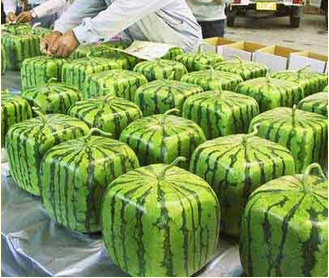
Another way to foster wonder is to show unusual photos that might elicit student curiosity. Consider these possible sources for finding unusual pictures: Pinterest, Flickr, and Google Images.  What do you wonder about when you see the image below? Post an image like this and have students generate questions. Use this as an opportunity to teach students how to write rich questions.

 http://www.whataboutwatermelon.com/index.php/2009/07/how-and-why-square-watermelons-are-made/

Wisdom can begin with wonder. I combined all my activities in a product: Dare to Wonder. Check out the preview to see some of the ways I incorporate these ideas in the classroom.

http://www.teacherspayteachers.com/Product/Read-Informational-Text-RI127-Wonder-Stems-Journal-Ideas-644206

post signature

Looking at Equivalent Fractions

Recently, a teacher came to me and explained how her students were learning about equivalent fractions. Some quickly picked up on the pattern—you know, the one where you multiply the numerator and denominator by the same number to make an equivalent fraction?

At this point in the learning process, students were encouraged to use math tools—fraction strips, pattern blocks, fraction circles, number lines—any tool that could help verify the equivalency of fractions. Students questioned, "Why do I have to show it if I already know it?"

Good question. But what do the students already "know"? A quick pattern of computation? Or the true conceptual understanding of what it means for fractions to be equivalent? As teachers, we have to be careful not to have students jump right to the abstract. It is important to keep in mind the C-R-A sequence of instruction. That is to start with the concrete (use a math tool to verify reasoning), move to the representational (draw the model pictorially), and then to the abstract (numbers and symbols: reducing, multiplying, etc.) while making connections between the different phases. It is also effective to have students use concrete models and represent the learning visually simultaneously or be at the abstract level and confirm with visual representations. Check out a previous blog post to read more about C-R-A. Click here.

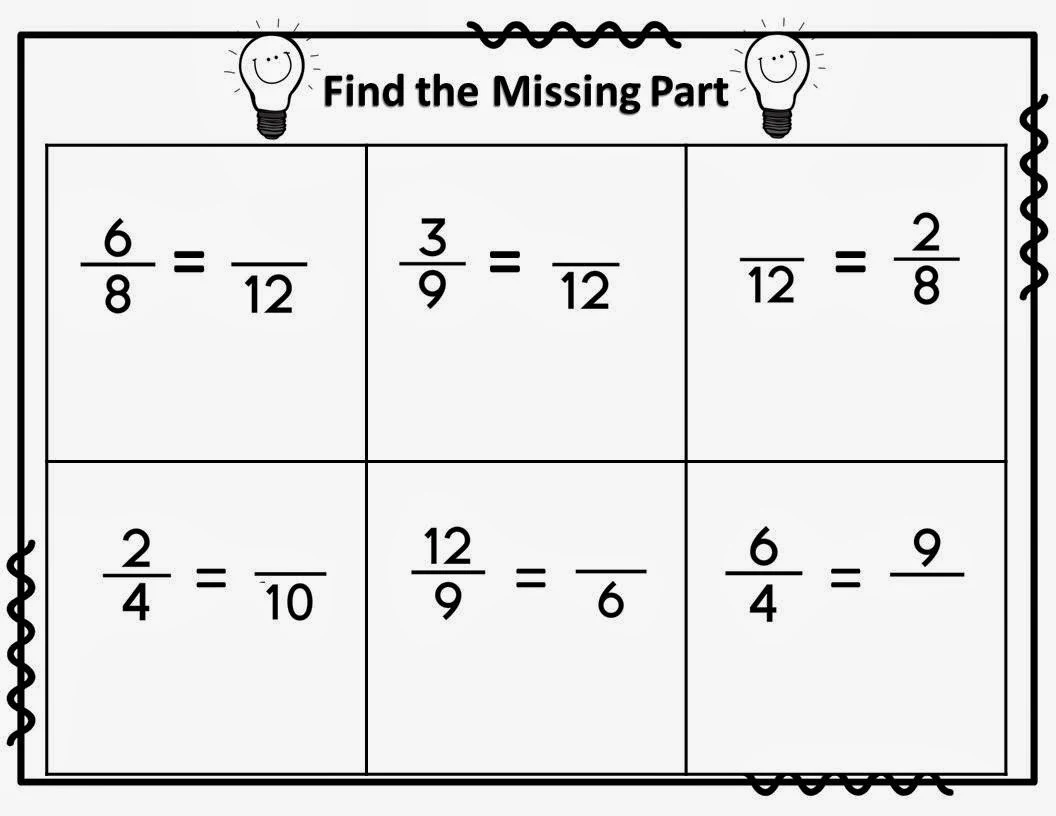
So, we decided to show students fractions where equivalency could not be simply determined by multiplying the numerator and the denominator by the same number. Students would have to reason and verify using the different math tools because the "rule" no longer worked. Check out the fractions below. Can you see how different thinking might be required using problems such as these? Click on the images if you would like to grab a freebie.

https://app.box.com/s/6azxnld1s5krjs4cgfud

 When students are working through these types of problems allow them to choose the type of math tool they want to use. Have students see different ways to defend thinking and multiple ways to show the fractions using the different manipulatives.

Chapter 10: In the Guided Math Classroom (BMC Book Study)

 "You cannot talk a child into learning or tell a child to understand." (Marilyn Burns 2000)
The power of learning comes from within!


Well this is the last chapter of Laney Sammons's book, Building Mathematical Comprehension. A big thank you goes out to Brenda from Primary Inspired and Beth from Thinking of Teaching for organizing this book study. I am hoping you have enjoyed reading the different posts from the different bloggers and have a few takeaways to add to your teacher's toolbox for the coming school year.

The comprehension strategies outlined in previous chapters can be utilized in conjunction with any instructional approach in the math classroom. For those teachers who utilize the Guided Math approach, you can see how these strategies can support the foundational principles of Guided Math (275).
  • All children can learn mathematics. Yes, they can!
  • Learning at its best is a social process. Let the math talk begin.
  • A learning environment that encourages modeling, think-alouds, guided/independent problem solving opportunities, and purposeful conversations supports mathematical growth.
  • Learning math is a constructive process.
  • Ultimately, children are responsible for their learning.
Students need to be immersed in a world of mathematics. They need to be careful observers who view their world through a mathematical lens in order to investigate and recognize relationships and generalize about their mathematical experiences.

Components to consider when implementing Guided Math:
  • A Classroom Environment of Numeracy. Students should use manipulatives, compute, compare, categorize, question, estimate, solve problems, converse, and write about their mathematical thinking. All students should be expected to engage in making meaning of the world mathematically (281). Have you ever read the book Math Curse by Jon Scieszka? This book is a great way to bring math to life and show that math is indeed everywhere!
  •  Math Stretches and Calendar Board Activities. These activities can require students to review concepts already covered and mastered, relate to concepts currently being explored, or preview what mathematical concepts are to come. (282) When starting a unit on measurement, this Measure Up: Measurement Sort could be used as a Math Stretch to preview what is to come. Click here to view a description of the activity and click here for a copy of the Measurement Sort. This activity requires students to think about what they may already know related to measurement units. The activity can promote mathematical thinking where students then can share their ideas in a Math Huddle. Student thinking can evolve during the Math Huddle and while the unit on measurement unfolds. For calendar math, check out this site. If you click on one of the numbers in the left grid, it will give interesting facts about that number. What a cool way to hook learners and add a little something different to calendar math. What are some activities you do for calendar math? Feel free to link up and share your ideas.
  • Whole Class Instruction. This is the time when all students get the same message and engage in the same activity at the same time. Mini-lessons, modeling, think-alouds, and activating strategies can be accomplished during this time. Caution must be taken when using whole class instruction knowing that some students are hesitant to talk in a large group setting, not all students will necessarily have time to participate, and inattentiveness may sneak up on some students (283). One activity I have done during whole class instruction is Number Talks. Click here and check out this previous post to see how it works. This is just one way you can do it. Have you tried this before? Might this work with your students?
  • Guided Math Instruction with Small Groups of Students. It is imperative that small groups are kept fluid and change based on the readiness levels of students. More time is given to each individual student and observations of students can help drive/guide instruction during small group instruction(284). Click here to find a Small Group Instruction ~ Record Keeping sheet. This sheet can help in recording data that can be referred to when making instructional decisions. Click here to read a previous post about small group instruction.
  • Math Workshop. It is here where students take responsibility for their own learning. It is a time for students to show what they know. Monitoring student work and providing feedback is key to ensuring this time is maximizing student learning (284). Learning contracts and menus can be used to design mathematical experiences for students to work on during math workshop time. Click here to see a Fractions: Thinker Keys Menu.
  • Individual Conferences. Conferences can be used to assess student understanding, identify and clarify any misunderstandings, and to extend/refine student understanding. Conferences should be brief with a targeted goal in mind (285). Have you ever visited Dr. Nicki's Guided Math Blog? Over on her site she has some conference templates you might be able to use when you conference with students. Dr. Nicki's post on Individual Math Conferences can be found here.
  • An Ongoing System of Assessment. Effort needs to be made to ensure there is a balanced system of assessment. Observations, discussions, formative assessments, summative assessments, and student reflections are all essential in a balanced system of assessment. I have used a Lesson Recap as a formative assessment tool to help me gauge my students' understanding. Click here to see a copy of the recap. You can easily adapt it to a skill/concept your students are working on. To read a little more about the Lesson Recap click here. You will find the description towards the bottom of the post.
Whether we incorporate all of these components or some of them in our math classrooms, it is with hope that we are teaching our students to become mathematicians!


    Powered by Blogger.