Pam's Place: Fractions

Showing posts with label Fractions. Show all posts

Halloween Activities for the Upper Elementary Classroom

By the time Halloween arrives, your students are thinking about costumes, candy, and trick-or-treating. Meanwhile, you’re worrying about the lessons to teach, the skills that need practice, and how you’re going to keep their attention. You may not want to turn Halloween into an all-day event or completely change your plans. The good news is that you don't have to. A few well-placed Halloween activities can embrace the excitement while keeping your regular classroom routine moving.


These Halloween activities for the upper elementary classroom include math and literacy activities.

Halloween Activities Can Fit Into Your Regular Routine

Before adding another activity to your October plans, look at what is already happening during your school day. Maybe your students start the day with morning work, rotate through math centers, complete independent writing, or need something productive for early finisher time. Those are easy places to add Halloween activities without creating another lesson to squeeze into your schedule. If you are working on fractions, choose a Halloween activity to review them. If your students need writing practice, use monster-themed writing prompts for a writing center. 


You also don't need to use Halloween activities to fill your whole day. Pick one part of your routine where a themed activity will feel fun and not overwhelming. A small change can share the excitement your students already feel while keeping routines in place.


Include Halloween Activities In Math Practice

This free Halloween fraction activity has your students design ghosts while practicing multiplying a whole number by a fraction.

One of the easiest places to add Halloween activities is during your math class. There is no need to plan out an entire Halloween math lesson. All you need to do is swap one regular practice activity for a themed one. Your students will still work with the same math concept, but the Halloween theme makes practice feel more exciting.


For example, my free Halloween fraction activity has your students design ghosts while practicing multiplying a whole number by a fraction. Students will follow fraction directions that tell them how many ghosts should have certain features. For example, they may be told that 1/2 of the ghosts have purple glasses. They will need to multiply the total number of ghosts by 1/2 to figure out how many have purple glasses. This activity gives them a reason to apply the math rather than simply solve another set of equations. 


Before your students begin, model one. Have your students identify the whole number of ghosts, the fraction rule they need to apply, and how they can determine how many ghosts need that feature. Ask them to explain their thinking before they start drawing. This quick model helps you make sure that your students understand the math behind the Halloween activity instead of focusing only on decorating their ghosts.


Students can practice multiplying fractions by.a whole number with these Halloween activities.

Once your students get started, encourage them to solve each problem before adding the corresponding feature. You can circulate and ask questions such as, "How did you decide how many ghosts needed that feature?" or "How can you check your answer?" If your students need more support, complete another example together before sending them back to work. Your students who are ready for more independence can complete the remaining directions and explain their reasoning afterward.


If your students could use more practice with this skill, you can continue with my Multiplying Fractions by a Whole Number Halloween Fraction Activities. It gives students additional opportunities to practice multiplying fractions by whole numbers while keeping the same Halloween theme.


Turn Math Centers You Have Into a Halloween Activity

Math centers are another easy place to work Halloween activities into your regular routine. Choose a skill your students already need to practice and add a Halloween-themed activity to your rotations. Students get a seasonal change of pace while still working on the math skills that are already part of your instruction.


Use this spinner activity as a Halloween math center.
My Decimal Spinner Games work well for this because your students can practice decimal skills while working with a partner or small group. For each center, choose the game that matches the skill your students are currently practicing. Place the game, spinners, and any needed recording materials at the center before students arrive. If your groups need different levels of practice, choose the game that best fits each group's needs.


Before adding the game to a rotation, play one round together. Show your students how to use the spinner, what to do with the decimal they land on, and how to record their work. Then have one student model the next turn while the class talks through the steps. Spending a few minutes modeling upfront can save you from answering the same questions during every rotation.


Once your students understand how the game works, use it wherever your partner practice fits into your math block. You might place it in the center while you meet with another group or use it for extra decimal practice. Keep your usual expectations for showing work, checking answers, and working with a partner.


Use This or That for Halloween Math Practice

You don't need a printable or special materials for all the Halloween activities you bring into your classroom. A simple This or That question can turn a few minutes of your math block into meaningful data practice. Think of a Halloween candy question and give your students two choices. Then, you'll have everyone cast a vote. You can collect responses with a show of hands, sticky notes, or tally marks on the board.


Turn an engaging this or that game into Halloween math practice.

You can try questions like, “Chocolate bar or peanut butter cup?” or “Sweet or sour?” You could also ask, “Candy corn: love it or leave it?” and “Save your favorite candy for last or eat it first?” Record the votes so your students can see the data being collected and totaled. Once everyone votes, you have a set of class data to use for math practice.


From there, match your Halloween activity to the skills your students are currently learning. You can have your students create a bar graph, compare the two categories, or write an explanation of what the data shows. If you are working with fractions, you can have your students write each choice as a fraction of the class. If you have students ready for a challenge, have them convert those fractions to decimals or percentages when the numbers allow.


This is one of those easy Halloween activities you can repeat without it feeling exactly the same. Change the question and the math task while keeping the routine the same. That way, you get a little Halloween fun without adding a complicated activity to your math plans.


Bring Halloween Activities Into Your Writing Centers

Writing time, literacy centers, and those unexpected extra minutes are also opportunities to bring in Halloween activities. A monster theme can make writing and language practice feel fresh and seasonal. 


Bring Halloween activities into ELA with my Monster Mania resource.
My Monster Mania activities give you several ways to do that! You can use different activities with your different students based on their readiness or interests. That flexibility makes it easier to fit the Halloween theme into your plans. Monster Mania includes six writing tasks covering a friendly letter, quatrain, jingle, summary, movie review, and recipe. 


I recommend using the monster movie review when your students are practicing opinion writing and supporting their ideas. The Monster Munch recipe works well when you want students to think about sequence and clear directions. If you've been working with poetry, your students can create a monster quatrain or jingle. 


Before your students can work on their own, review the writing task you've chosen. You can use the reference sheets I included to help your students revisit features and vocabulary before they begin. Model by thinking aloud about how you might brainstorm two or three ideas. Then, give your students time to plan and write their own pieces. 


You can also give your students more choice once they are familiar with the different formats. Place several task cards in your writing center and let your students select one during their rotation. Early finishers could choose a task and continue working on their writing when they have extra time. 


Roll Your Way Through a Quick Halloween Language Review

You know those five minutes that somehow appear before lunch, dismissal, or the next activity? They aren't always long enough to start something new, but they are plenty of time for a quick language review. My Monster Mania Roll-a-Cube activity turns those small pockets of time into another chance to include Halloween activities. Your students can review alliteration, synonyms, multiple-meaning words, comparisons, hyperbole, and dialogue with a monster-themed task.


Use this roll-a-cube activity as a fun Halloween themed language review.
Before using the cube, introduce or review the six terms with students. I included a Monster Anchor Mat that gives your students space to record definitions and examples for each skill. Have your students keep the completed mat somewhere they can access easily during the activity, like a folder or binder. 


When you have a few extra minutes, roll the cube and use whichever skill appears. Give your students a moment to think before asking them to respond to the monster prompt. You can have your students share ideas orally when time is short or write their responses when you have more time.


You can also move Roll-a-Cube into a literacy center once your students understand how the activity works. Your students can work in partners and take turns rolling, completing the task, and talking about their responses. If a skill needs more attention, stop and review it together before continuing. 


Keep Halloween Fun Without Changing Everything

The best Halloween activities can fit right alongside the routines and skills you're already teaching. A seasonal math center, quick poll, writing activity, or five-minute review may be all you need to embrace the excitement. Most importantly, make Halloween work for your classroom instead of feeling like you need to do it all. You can enjoy a little seasonal fun while keeping learning and your routine at the center of the day.


Keep Your Students Engaged With More Resources

Halloween may only last one day, but finding ways to keep your students interested in math happens all year. Seasonal Halloween activities are one way to make familiar skills feel fresh without changing what you're teaching. You can use that same approach throughout the year by changing the theme, format, or type of practice your students complete.


Check out my TPT store for even more resources to keep your students engaged.


If you're looking for more ways to engage your students with their learning, head over to my TPT store. You'll find seasonal math resources, math mysteries, task cards, games, and other activities for practicing important skills. Whether you need something for a math center, extra review, or seasonal Halloween activities, you'll find options that fit with what you are already teaching.

Save for Later

Save these Halloween activities to your favorite math or ELA Pinterest board so you can find them when October rolls around. You'll have ideas ready when your students start counting down to Halloween!


Halloween is the perfect time to bring some seasonal fun into your upper elementary classroom without sacrificing meaningful learning. Discover engaging Halloween activities for 3rd, 4th, and 5th grade that keep students learning, creating, and excited all October long.


Understanding Fractions and Building Fraction Number Sense

If you’ve ever taught fractions, you know they can stop students in their tracks. Just when students are feeling confident with whole numbers, we ask them to think about halves, thirds, or fourths, and everything changes. Confusion sets in as some students start treating fractions like whole numbers, saying things like 1/2 + 1/3 = 2/5. They're using the logic that worked for whole numbers, and it's our job to help them see why fractions play by different rules. With the right mix of hands-on activities, hooks, and multiple representations, fractions can become a concept that students explore with curiosity and a deeper understanding.

Help students understand fractions and build fraction number sense using these tools and resources.

Building Fraction Sense from the Ground Up

A strong foundation in fraction sense starts with addressing common misconceptions through visual models and discussion. Students may assume that bigger denominators mean bigger pieces, when in reality the opposite is true. Using visuals like fraction strips or side-by-side comparisons helps students see that as the denominators increase, the size of each piece decreases. Students may also see fractions as two separate numbers when they hear phrases like “the top number” and “the bottom number.” Part of our work is helping them understand that a fraction is a single value where the numerator and denominator work together to represent one quantity. When students build fractions with models, they start to see that the denominator represents the size of each piece and the numerator shows how many of those pieces make up the fraction. 

Build fraction sense from the ground up using tools like fraction circles, pattern blocks, fraction tiles and cuisenaire rods.


Unit fractions, fractions with a numerator of one, are the building blocks of fraction learning. When students see that 1/4 is one piece of four equal parts, they can extend this thinking to other fractions. Fractions like 3/4 or 5/8 are formed by joining unit fractions of the same size. Three 1/4 pieces make 3/4, and five 1/8 pieces make 5/8. Using concrete visuals can help students grasp fraction ideas more easily than abstract numbers alone. Activities such as folding sticky notes into equal parts or building fraction strips and labeling each piece as a unit fraction help students visualize an abstract idea in a concrete way.


After students develop an understanding of unit fractions, guide them to use multiple representations to make deeper connections. Fractions can show parts of a region, parts of a set, points on a number line, or even the area of a shape. Using fraction circles, pattern blocks, blank fraction tiles, and Cuisenaire rods helps students see how different models can represent the same fraction. For number lines, you can use a piece of masking tape on the floor labeled 0 and 1. Then, you can ask your students to “stand” at different fractions like 1/2 or 3/4. Pair students to model the same fraction in different ways. Comparing a number line to fraction circles helps students see that different representations can show the same value. These experiences turn fractions into something students can "see" and experience.


Building Fraction Understanding through Picture Books

Use books like "Give Me Half" or "The Hershey's Milk Chocolate Fractions Book" to hook students.
Picture books have a way of making math come alive, and fractions are no exception. Titles such as The Hershey’s Milk Chocolate Fractions Book and Give Me Half! capture students' attention and show how math appears in everyday life. They provide a familiar context that helps fractions make sense and feel more meaningful. 


It's not just about reading the book; it's about how you use it in your teaching! After reading Give Me Half!, you can have your students act out their own scenarios of sharing snacks, cutting pizza, or dividing toys. Literature gives fractions a story. For the Milk Chocolate Fractions Book, use real chocolate bars (if possible) or paper "chocolate bars" to model fractions as the book is read. These experiences give fractions meaning that stays with students long after a worksheet is forgotten. 


Pairing literature with hands-on modeling is a winning combination. After a read-aloud, transition to a quick sticky note folding activity or a fraction grab bag. Students can pull small objects like beads, erasers, or cubes from a bag and identify what fraction of the set they hold. These quick transitions keep energy high and strengthen conceptual understanding.


Show, Just Don’t Tell: Fractions

Use resources like "Show, Just Don't Tell" to help students explore fractions.
To deepen understanding of fractions, try Show, Just Don’t Tell: Fractions. This activity encourages students to move beyond naming what they know and to show their understanding in different ways. This resource includes fraction cards, action boards, and recording sheets. Students draw a fraction card, roll a number cube, and use the action board to determine how to represent their fraction.

The action boards are designed to keep things fresh and varied. Your student will be asked to represent the fraction as part of a region, as part of a set, in words, on a number line, in a story problem, or even with manipulatives. The best part is that there’s no single “right” way to respond. This means every student has an entry point into the activity and can show what they know in a way that makes sense to them.


This resource works well in small groups, math centers, or even as a formative assessment. You can differentiate easily by giving certain groups fraction cards with smaller denominators while challenging others with twelfths. Your students will love the variety, and you'll love seeing deep thinking unfold.


What’s the Question? Fraction Task Cards

What's the Question? Fraction Task Cards are another great tool to use when building fraction number sense.
A fun way to help students think more flexibly about fractions is through Here’s the Answer… What’s the Question? Instead of giving students a problem and asking them to solve it, this activity flips the script. Students are given a fraction and then challenged to come up with questions or scenarios that match it. For example, if the fraction is 3/4, one student might write, “I ate three out of four pieces of pizza.” Another might say, “I ran three laps out of four around the gym.”


This reversal encourages students to think flexibly about fractions and understand how a single fraction can appear in various real-life situations. It builds creativity and reinforces understanding at the same time. Task cards make this activity easy to manage and can be used as a whole-group warm-up, a partner challenge, or a math center option.


The beauty of this activity is that it naturally differentiates to meet students where they are. Some students will stick to straightforward examples. Others will create more complex ones. Either way, they’re deepening their understanding of fractions and learning to communicate their mathematical thinking.


Cubing with Fractions

Help students understand fractions using this "Cubing with Fractions" resource.
If you are looking for a way to differentiate and add variety to your fraction practice, try Cubing with Fractions. Cubing is a strategy where students roll a cube with different tasks on each face. For fractions, the tasks might ask your students to compare two fractions, create a story problem, draw a model, or explain a concept in words.


What makes cubing powerful is that you can tier the cubes based on readiness levels. One group of students might work with simpler denominators and tasks. Another group tackles more challenging fractions. Everyone is working on the same overall skill, but at a level that moves their learning forward.

Students enjoy the element of chance when they roll the cube. The activity promotes thinking, discussion, and connections across fraction concepts, making it ideal for review, assessment, or adding energy to a Friday math block.


Grab Your Free Resource for Fractions

Grab this free resource for building fraction number sense.
If your fraction lessons need a little spark, try this Fraction Learner Menu Using Thinker Keys freebie. This isn't your ordinary learner menu. It uses Thinker Keys to stretch students' reasoning and flexible thinking as they explore fraction concepts. These question prompts help students think creatively and approach ideas from different angles. The activity works well with small groups, in math centers, or for whole-class review.


Make sure to download your freebie and try it with your students. This learner menu is designed to stretch their thinking about fractions and spark thoughtful discussion. 


Bringing It All Together 

Fractions can be a challenging topic in elementary math. Addressing misconceptions, introducing unit fractions as building blocks, and providing students with multiple ways to see and represent fractions help them think more flexibly about these concepts. Incorporating engaging hooks like picture books and hands-on activities makes fractions feel less abstract and supports deeper understanding. 


Save for Later

Want to save these fraction ideas for later? Pin this post to your favorite teaching board so it's easy to find whenever you need a little fraction inspiration.  

Looking for ways to help your students understand fractions in upper elementary? These fractions tools and resources will help your student build fraction number sense in fun and hands-on ways!


Productive Struggle in Math

When differentiation was part of my classroom instruction, creating a learning environment with clear expectations was very helpful. One expectation I held for myself was creating opportunities for students to practice "productive struggle" in math. While the level of scaffolding varied based on readiness, I made sure not to take away the challenge or integrity of a math task. Productive struggle wasn’t about not helping or leaving students to figure it out on their own. It was about helping them develop the ability to persevere, even when the math became difficult.

Learn about the importance of productive struggle in math and how you can guide students through it in order to build math stamina.

Fraction Menu & Thinker Keys

I love teaching fractions. And I LOVE Thinker Keys. Click here to read more about this framework by Tony Ryan.

Okay, now onto the post. Hope you can use this fraction menu with your students. And, I hope you consider trying Thinker Keys in your classroom.

-------------------------------------------

Thinking is essential in math. I am always looking for ways to push my math students' level of thinking beyond just calculating an answer. With Common Core, students are asked to show multiple representations and dig deeper into mathematical understandings. Using Tony Ryan's Thinker Keys, I designed this Learner Menu for students to use to push the level of conceptual understanding of fractions with some higher level thinking. The Learner Menu could be used after instruction on the key concepts has taken place. Notice how the criteria at the top of the menu asks students to demonstrate their mathematical thinking and understanding when completing the tasks. Also notice how there is not one right answer, and sometimes that answer is not right there.
 
https://app.box.com/s/q6xxaec7rjcw5vq5e8q1

Thinker Keys are a tool teachers can use to embed thinking into any lesson. They can be used as part of a Learner Menu as seen here. Thinker Keys can start a lesson. Thinker Keys can be used as part of small group work to encourage Math Talk. In 2005, Tony Ryan, a Learning Consultant from Australia, updated the Thinker Keys. The earlier version, used on this menu, helps foster creative thinking while focusing on a deeper understanding of the standards. If you want to learn more about the Thinker Keys, click the links below.

post signature

Looking at Equivalent Fractions

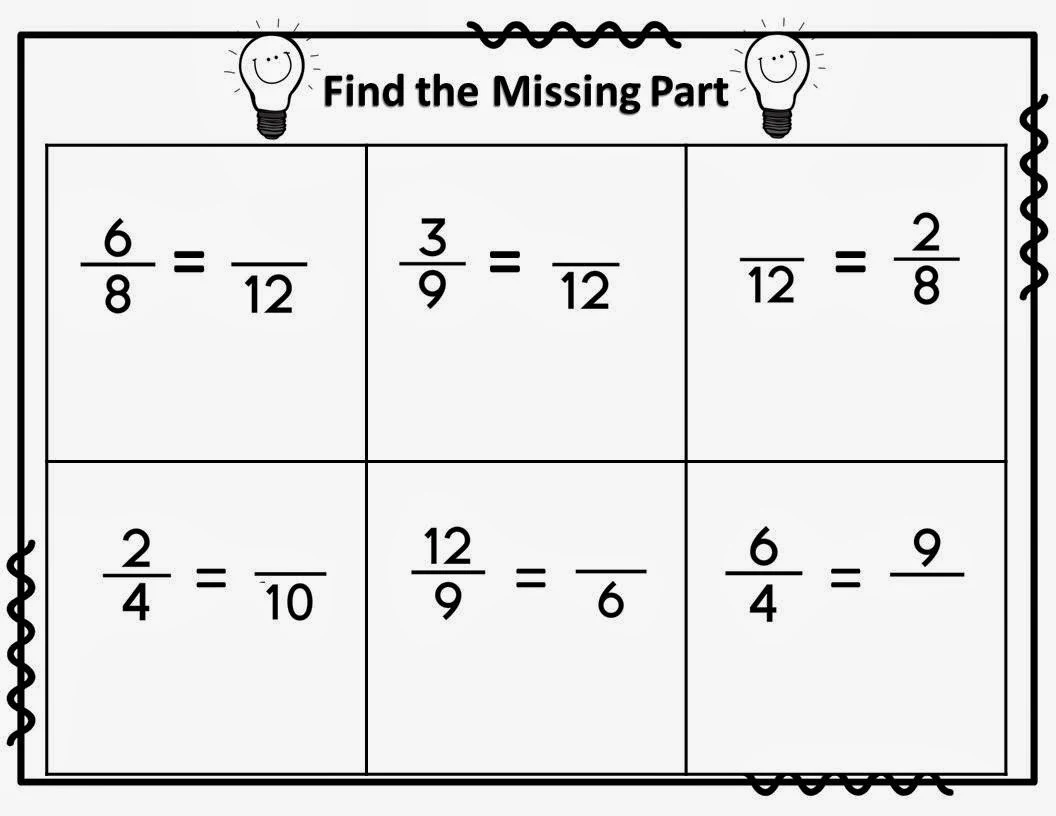
Recently, a teacher came to me and explained how her students were learning about equivalent fractions. Some quickly picked up on the pattern—you know, the one where you multiply the numerator and denominator by the same number to make an equivalent fraction?

At this point in the learning process, students were encouraged to use math tools—fraction strips, pattern blocks, fraction circles, number lines—any tool that could help verify the equivalency of fractions. Students questioned, "Why do I have to show it if I already know it?"

Good question. But what do the students already "know"? A quick pattern of computation? Or the true conceptual understanding of what it means for fractions to be equivalent? As teachers, we have to be careful not to have students jump right to the abstract. It is important to keep in mind the C-R-A sequence of instruction. That is to start with the concrete (use a math tool to verify reasoning), move to the representational (draw the model pictorially), and then to the abstract (numbers and symbols: reducing, multiplying, etc.) while making connections between the different phases. It is also effective to have students use concrete models and represent the learning visually simultaneously or be at the abstract level and confirm with visual representations. Check out a previous blog post to read more about C-R-A. Click here.

So, we decided to show students fractions where equivalency could not be simply determined by multiplying the numerator and the denominator by the same number. Students would have to reason and verify using the different math tools because the "rule" no longer worked. Check out the fractions below. Can you see how different thinking might be required using problems such as these? Click on the images if you would like to grab a freebie.

https://app.box.com/s/6azxnld1s5krjs4cgfud

 When students are working through these types of problems allow them to choose the type of math tool they want to use. Have students see different ways to defend thinking and multiple ways to show the fractions using the different manipulatives.

Order Up! ~ Fraction Math Task

To culminate our study of fractions, students created "pizzas." Each student was given an order for a pizza. Based on their understanding of fractions, they "baked" a pizza made to order. Seeing that the goal of this activity was math-related, I did have some of the ingredients and the "pizza dough" ready for students to use so they could focus more on the math aspect of the activity. There are different ways to set up this activity. You know your classroom best.

Now, if you look at the sample orders, you will see that some of them are more complex. I differentiated the orders based on my students' readiness levels. Students first had to interpret what the order meant before they could actually start making their pizzas. If 2/3 of the pizza has mushrooms and 1/3 has mushrooms and tomatoes, does that mean that only one of the two-thirds section also has tomatoes? The questioning was necessary before clarity prevailed for our pizza makers.

After the pizzas were made, students checked each other's orders. We realized that some "customers" would not be happy unless we fixed their orders—a real-world problem for sure! Students then completed the Task Questions. The questions address the following I can... statements.

  • I can partition wholes into various amounts to solve a real-world problem.
  • I can explain what the numerator and denominator of a fraction represent.
  • I can use models to show and explain equivalent fractions.
  • I can use models to compare fractions.

Students can create their own "personal" pizzas rather than follow a given order. They can then use their "personal" pizzas to complete the Task Questions. Click on the two images above for your free copies of Pizza Orders and Task Questions.  Bon Appetit! 


Here's another way to build a conceptual understanding of fractions. This activity will reinforce that there are multiple ways to represent fractions.


understanding-fractions

Looking for a way to transform the way your students think about fractions? Check out these task cards that will flip your students' thinking from finding one right answer to generating many varied questions for a given "answer."


fraction-task-cards

Practical Tips for Teaching Subtracting Mixed Number

Have you ever taught subtracting mixed numbers, only to realize your students were following steps without understanding why? The process can quickly become a list of rules your students try to remember. I wanted my students to understand what was happening with the numbers before relying on an algorithm. So, I gave them opportunities to notice patterns, make connections, and test their thinking first.

Explore Subtracting Mixed Numbers Before Giving the Steps

When I taught subtracting mixed numbers, I wanted my students to grapple with the math before I explained the process. Instead of beginning with a list of steps, I gave them completed problems to study. They worked in small groups and looked for patterns across the examples. Their job was to figure out what the numbers could teach them.


The problems, like the ones on my free Subtraction of Mixed Numbers activity, were purposefully arranged to build on one another. My students looked at groups of completed problems and recorded a rule or pattern they noticed. Then, they used that thinking to solve a new problem in the "Try It Out!" column.


You don't need your students to discover perfectly worded math rules during this exploration. You want them to look closely and talk about what they see. Ask your students questions like, "What stayed the same?" or "What changed between these problems?" You can also ask, "Why do you think that happened?"


Your students might notice that common denominators stay the same when subtracting the fractional parts. They may recognize that some mixed numbers can be subtracted without renaming. Other examples show situations where there aren't enough fractional parts to subtract. Your students can then begin considering why a whole needs to be renamed in those problems.


With unlike denominators, your students can connect the process to equivalent fractions. That connection matters because subtracting mixed numbers pulls together several skills they have already learned. They aren't starting from scratch with an entirely new type of math. They're learning how familiar fraction skills work together.


Let Misconceptions Become Part of the Conversation

Exploring subtracting mixed numbers also gives you a chance to hear how your students are thinking. Sometimes their observations will be right on target. Other times, you'll hear an idea that has a red alarm going off inside your head because it reveals a misconception. Those moments can give you something valuable to discuss with all of your students.


For example, you might have a student who always subtracts the smaller fractional part from the larger one. Another might try subtracting the numerators and denominators. You may also see your students rename a whole without understanding what that whole represents. Instead of immediately correcting them, ask them to explain why their method makes sense to them.


Then, return to the examples and test your student's idea. Does that rule work for every problem? Can your students find an example where it stops working? This keeps the conversation focused on math reasoning rather than simply labeling an answer wrong.


My free activity also includes a "Find the Mistake" problem after the additional practice. Your students are shown an incorrect equation and asked to explain the mistake. Then, they solve the problem correctly. This gives you another chance to discuss misconceptions while subtracting mixed numbers.


Move From Noticing to Practicing Subtracting Mixed Numbers

Of course, noticing patterns is only the beginning. Your students will eventually need opportunities to use those ideas independently while subtracting mixed numbers. I liked moving gradually from examining completed examples to solving new problems. That gave my students a chance to test their thinking before working completely on their own.


The "Try It Out!" column in my freebie provides that first bridge. Your students will identify a pattern from the completed examples and then apply their thinking to another problem. I recommend actively moving around your classroom while your students work and listen to their explanations. Make sure to have them connect their solution back to the pattern they recorded.


The second page of my freebie moves your students into a "Use What You Learned" section with four additional subtraction problems. At this point, you can see which connections are beginning to stick. You can also identify your students who still need another example, model, or conversation when you pull them into small groups or as individuals.


This practice brings several previous skills together. Your students may need equivalent fractions, common denominators, regrouping, and subtraction to solve different problems. Subtracting mixed numbers gives them a reason to connect those skills instead of treating each one separately.


Connect Subtracting Mixed Numbers to Everyday Situations

Once your students understand the process, you can help them see where subtracting mixed numbers appears outside isolated computation. Think about measurements, distances, lengths, or quantities in a recipe. These situations naturally involve amounts that aren't always whole numbers. Suddenly, those fractions have a job to do. Your students see the importance of spending time learning this concept. 


Word problems also move your students beyond seeing a subtraction expression already written for them. Now, your students have to make sense of a situation and work with the quantities provided. You can ask your students what each mixed number represents before they begin calculating. That small question keeps the numbers connected to the situation.


My Pizza Gone Missing Math Mystery provides practice with adding and subtracting mixed numbers through 14 word-problem clues. The situations include distances, measurements, and quantities of ingredients being used by a pizza truck. As they work through the mystery, your students will encounter feet, miles, cups, pounds, fluid ounces, and pizzas.


As your students solve each clue, they will find the matching answer on their suspect tracking sheet. They eliminate the suspect with that answer and continue solving clues. When all 14 clues are solved correctly, two suspects remain. The mystery aspect increases your students' motivation as they continue their mixed-number practice.


Give Your Students Time to Make Sense of the Math

There can be pressure to move quickly when teaching subtracting mixed numbers. We all have felt the pressures of having many standards to cover and knowing plenty of skills are waiting behind this one. However, giving our students time to investigate doesn't mean we're avoiding efficient methods. We're building understanding that can support those methods.


Renaming is a good example. You don't want your students simply memorizing that they "borrow one" whenever a fractional part is too small. You want them to understand that the whole is being renamed as fractional parts. The value hasn't changed even though its form looks different.


That idea connects to practice your students have already done with equivalent fractions. It also reinforces the importance of keeping equivalent values while changing how a quantity is represented. Those connections can continue to matter as your students begin working with rational numbers and algebra later.


The progression doesn't need to be complicated. Let your students notice, discuss, test, practice, and eventually apply what they understand. When subtracting mixed numbers becomes more than memorized steps, your students have something meaningful to fall back on.


Resources for Teaching Subtracting Mixed Numbers

If you'd like to try this progression with your students, start with my free Subtraction of Mixed Numbers activity. Your students will examine completed examples, record patterns, and test their observations with new problems. They then move into more practice and finish with an error-analysis problem.


After your students have built confidence subtracting mixed numbers, you can create chances for your students to apply their knowledge with the Pizza Gone Missing Math Mystery. It provides a fun next step after your students have spent time exploring the mathematics.


If you are looking for additional math resources to help you supplement, support, or plan out your next unit, visit my TPT store for resources that are easy to prepare for your next class!


Build Understanding With Subtracting Mixed Numbers

Subtracting mixed numbers asks your students to bring several fraction skills together at once. That can feel like a lot at first. Giving them room to wrestle with the math can help those individual skills start connecting. You can then build on what they already understand as you introduce more efficient strategies.


You also don't need every student to make every connection immediately. The next time you teach subtracting mixed numbers, give your students a little space to work through the math. You might be surprised by what they notice or the questions they ask along the way. Those moments can help you decide what to model, revisit, or practice next. Your students aren't just learning how to get an answer. They're building connections they can use again.


Save for Later

Save this post to your favorite math Pinterest board so you have these subtracting mixed numbers ideas when your fraction unit rolls around. 


Powered by Blogger.